
Introduction
Journal rigid boxes serve the more personal, gift-oriented side of the stationery category, distinct from the wholesale, utilitarian positioning of a general notebook box — a journal is usually purchased as a considered gift or a personal treat rather than a bulk office supply, which shifts this format toward the same premium presentation conventions used across gift categories elsewhere in this catalog. The line between a notebook and a journal is more about intent and price point than any strict physical difference, and packaging is often what signals which category a given product is meant to occupy.A More Personal Kind of Stationery
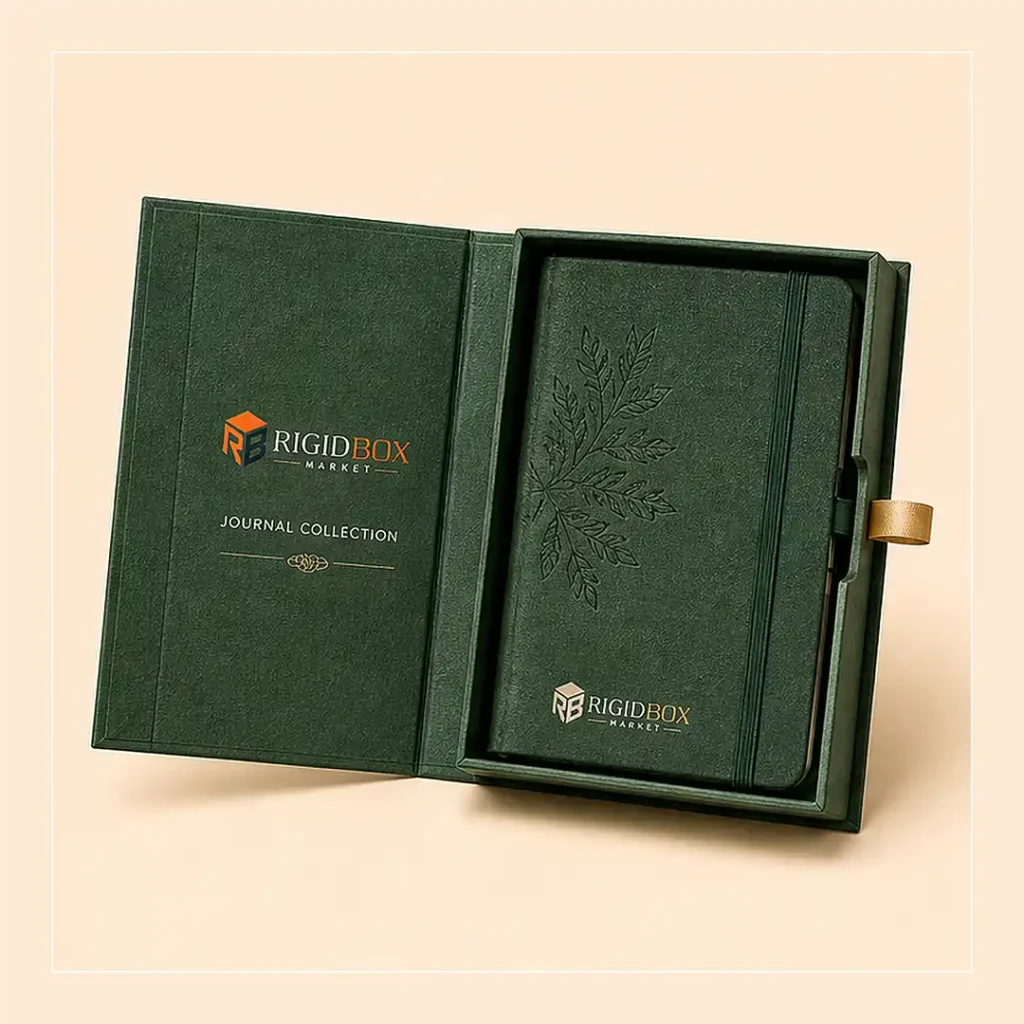
The shell uses rigid chipboard construction, with interior support typically a fitted platform or light cushioning that protects the journal's cover and corners from bending during shipping, corners being a particular point of vulnerability for higher-end journals with leather or fabric-wrapped covers. A dented corner on a leather-bound journal is considerably more noticeable, and harder to repair, than the same damage on a simple paperback-style notebook. Because journals are frequently purchased for their tactile, sensory qualities, the box's own finish often echoes that experience, a soft touch exterior for a soft-cover journal, for instance, extending the product's sensory appeal to the packaging itself before the journal is even removed from the box. That continuity between box and product is part of what separates a genuinely premium journal presentation from one that simply uses expensive-sounding materials without connecting them to the product inside. Gift-focused journal packaging also frequently includes a small extra, a ribbon bookmark tie or a printed inspirational quote card, treating the box as an extension of the journal's own reflective, personal purpose, giving the recipient a small additional touch before they've even opened the journal to its first page.Customization Options
Interior fit and cushioning can be built around a specific journal size and cover material, and this format supports the full range of standard finishing — foil stamping, embossing, debossing, spot UV, and matte, gloss, or soft touch lamination, generally applied with more attention to tactile quality than the simpler notebook format. Embossed or debossed detailing pairs especially well with journal packaging, since the tactile raised or recessed texture echoes the kind of considered craftsmanship a premium journal buyer is generally looking for. A ribbon closure or printed quote card is a common addition for gift-oriented journal packaging, and the quote itself is often chosen to set a reflective tone before the recipient even opens the journal's cover.- Corner-protective interior fit suited to leather or fabric-wrapped covers
- Exterior finish echoing the journal's own tactile qualities
- Foil stamping, embossing, debossing, and spot UV finishing
- Ribbon closures and printed quote card additions
- Matte, gloss, or soft touch lamination