
First Look
Clock rigid boxes protect a product with a genuine mechanical vulnerability at its center — the face, hands, and internal mechanism are all susceptible to damage from pressure or impact in a way that most home goods and decor items aren't, which puts more precision into this format's interior cushioning than its relatively modest typical retail price point might suggest. A cracked clock face or a bent hand renders the entire piece unsellable in a way that most decor scuffs or scratches wouldn't, since a clock's function is inseparable from its appearance.Protecting Face and Mechanism
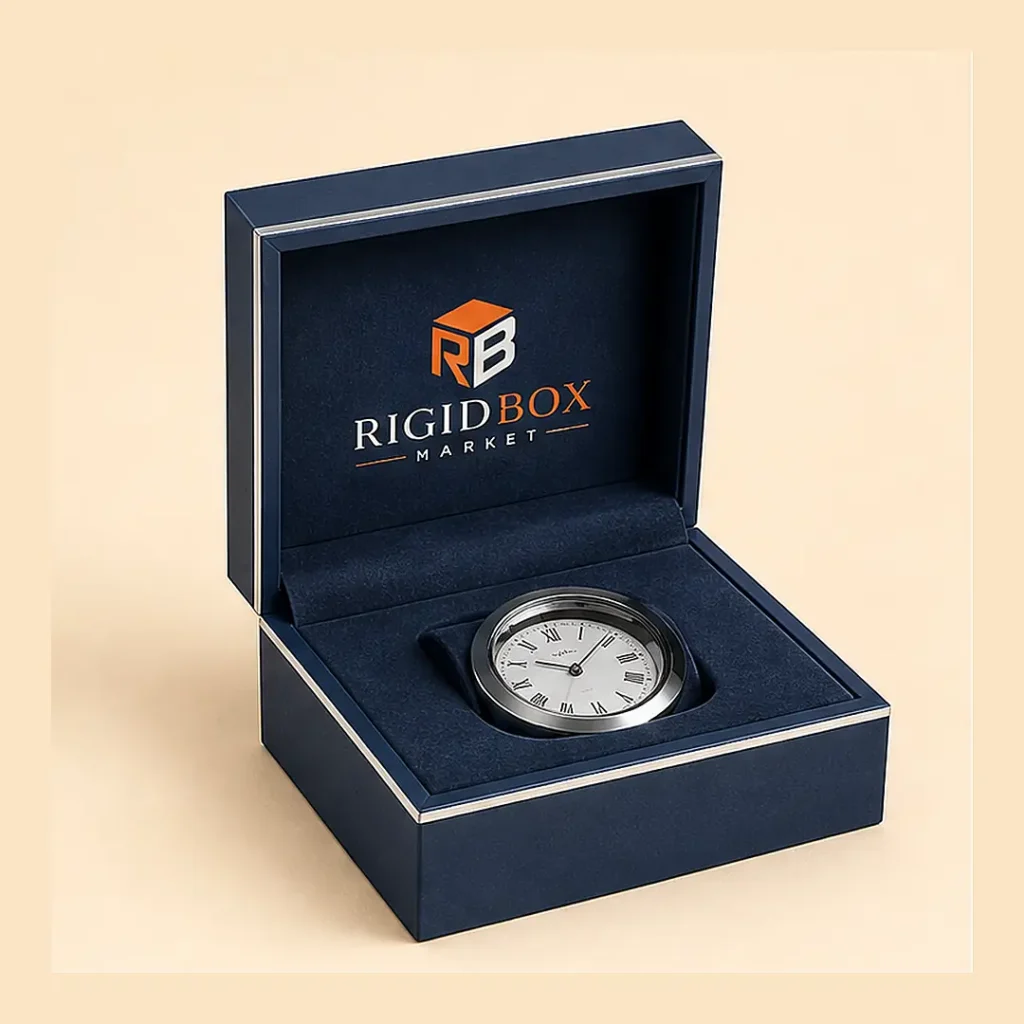
The shell uses rigid chipboard construction with interior cushioning, typically foam or a molded paperboard cradle, shaped to hold the clock securely with the face protected from any direct contact with the box's interior surface. Clock hands, particularly on analog designs, are one of the more delicate points on the entire product, easily bent out of alignment by even light pressure, which means cavity depth needs enough clearance above the face to avoid any contact at all rather than simply cushioning against impact. A bent hand doesn't just look wrong, it can throw off the clock's actual timekeeping accuracy, turning a cosmetic issue into a functional one. Larger wall clocks add another consideration, since their broader, often lightweight construction can flex or warp under uneven pressure in a way a smaller, denser desk clock generally doesn't. Thin wall clock faces, sometimes made from lightweight wood or metal composites, need support distributed evenly across their full diameter rather than concentrated at the center.Customization Options
Cavity shape and depth can be built to a specific clock design, from a compact desk clock to a larger wall-mounted piece, and this format supports the full range of standard finishing — foil stamping, embossing, debossing, spot UV, and matte, gloss, or soft touch lamination. Round clock faces sometimes call for a correspondingly shaped cavity rather than a generic rectangular cutout, giving the interior a more tailored, purpose-built feel. Home goods and gift brands frequently favor finishes that echo the clock's own material and finish, a matte box for a matte-finished clock, for instance, creating a cohesive presentation from packaging through to the product itself.- Cavity design with clearance above the face to protect hands and mechanism
- Support built for both compact desk clocks and larger wall pieces
- Foil stamping, embossing, debossing, and spot UV finishing
- Finishes coordinated with the clock's own material and color
- Matte, gloss, or soft touch lamination